


Demand planning and logistics platform for global operations
How I led the discovery, identified friction points, and built the foundations of an operational platform, from information architecture to visual identity.
Overview
 Overview
ULMA Construction needed to centralise demand management, stock, logistics, and coordination between Sales and Operations in a single platform.
The project had already started, but the development team was building features without a defined information architecture or clear user profiles. I joined as Lead for just over 2 months to drive the discovery with business stakeholders, identify the real blocker, and lay the strategic foundations needed to move forward with confidence.
Product Outcomes

Problem
 Problem
ULMA teams operated with inconsistent documentation formats, manual steps, and siloed communication. These inefficiencies created delays, errors, and operational risks across operations.
Goal
 Goal
Goal
Define a coherent information architecture and a clear user model that would allow the team to build the right product, reducing operational complexity and ensuring every feature served a validated user need.
Challenges
 Challenges

Understanding
the users
 Understanding
 the users
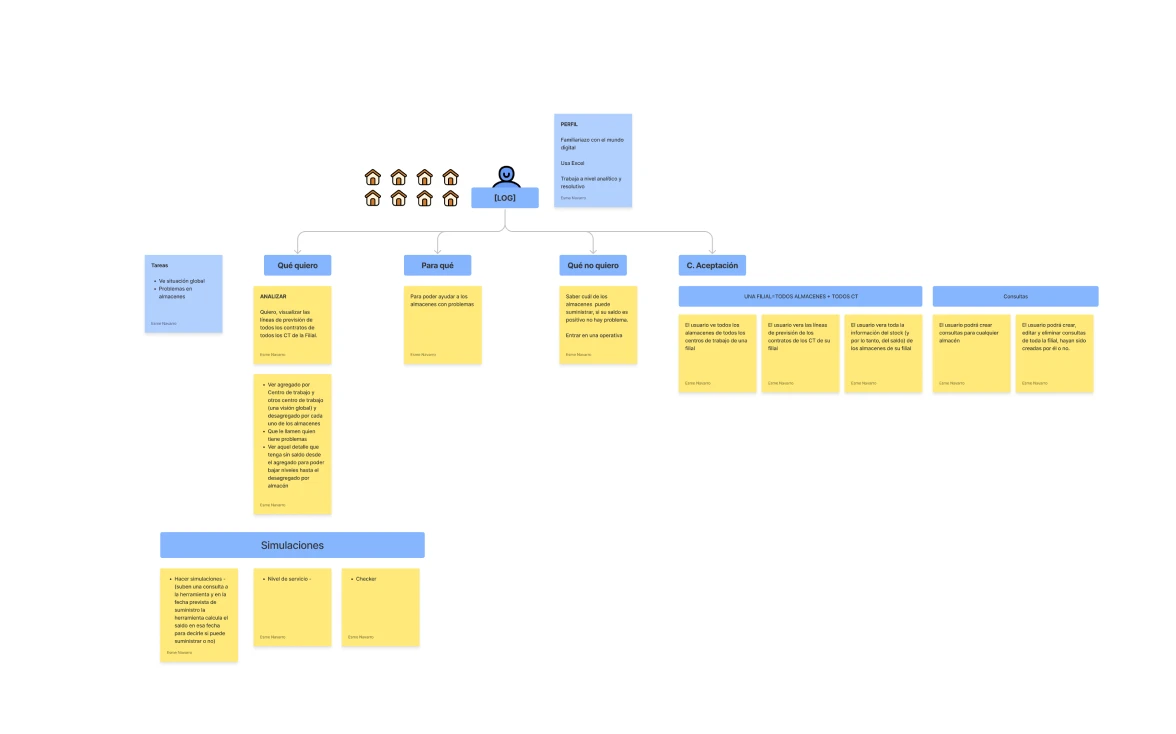
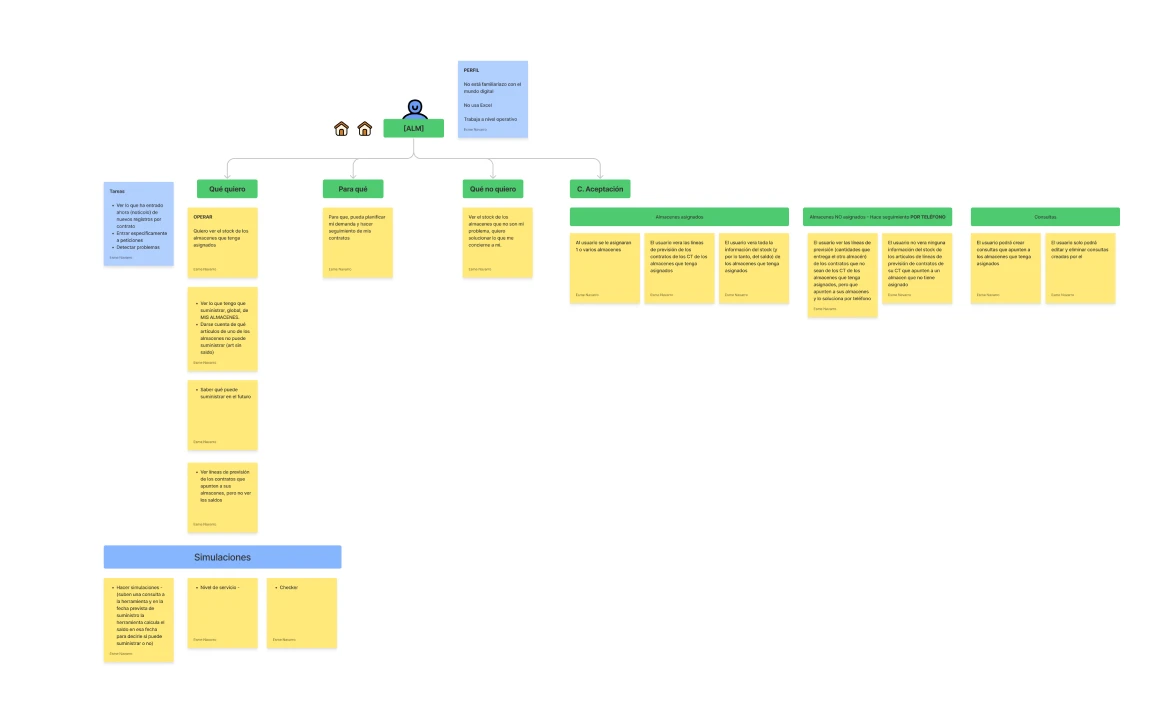
These two profiles were defined through a discovery session with 2 key stakeholders that I organized and facilitated, after identifying the project lacked clarity on user goals and had been building on assumptions.

LOG · Logistic profile

ALM · Operational profile
The difference between the two profiles was not just a matter of role, it was a matter of scope. The LOG sees the entire filial, the ALM only sees their warehouses. That distinction was the key to defining a coherent information architecture: without it, establishing access levels, priorities, and flows that made sense for either profile was impossible.
Approach
 Approach
01. Discovery and Information Architecture
We started by analysing what existed: defined processes, features, and operational needs communicated by business stakeholders in kickoff sessions. We quickly identified that key information was missing to define coherent flows. After going deeper with the PM and the technical team, we all agreed there was not enough foundation to keep building. We escalated to business and paused the sprint.
Process framework

Discover
Understand roles, constraints, and critical workflows.

Define
Define responsibilities, and system logic.

Develop
Prototype flows, validate with users and stakeholders.

Deliver
Support implementation with clear specs and alignment.
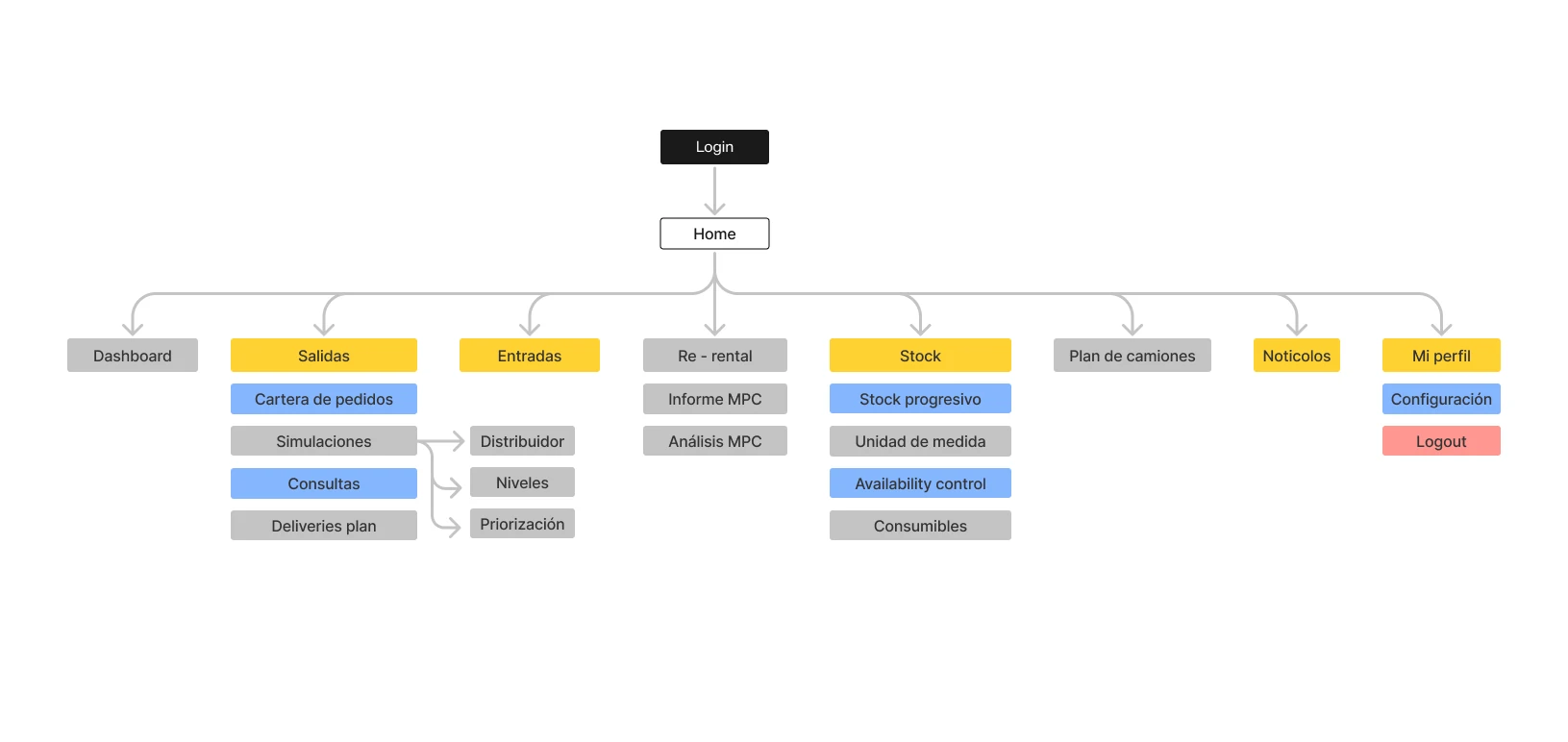
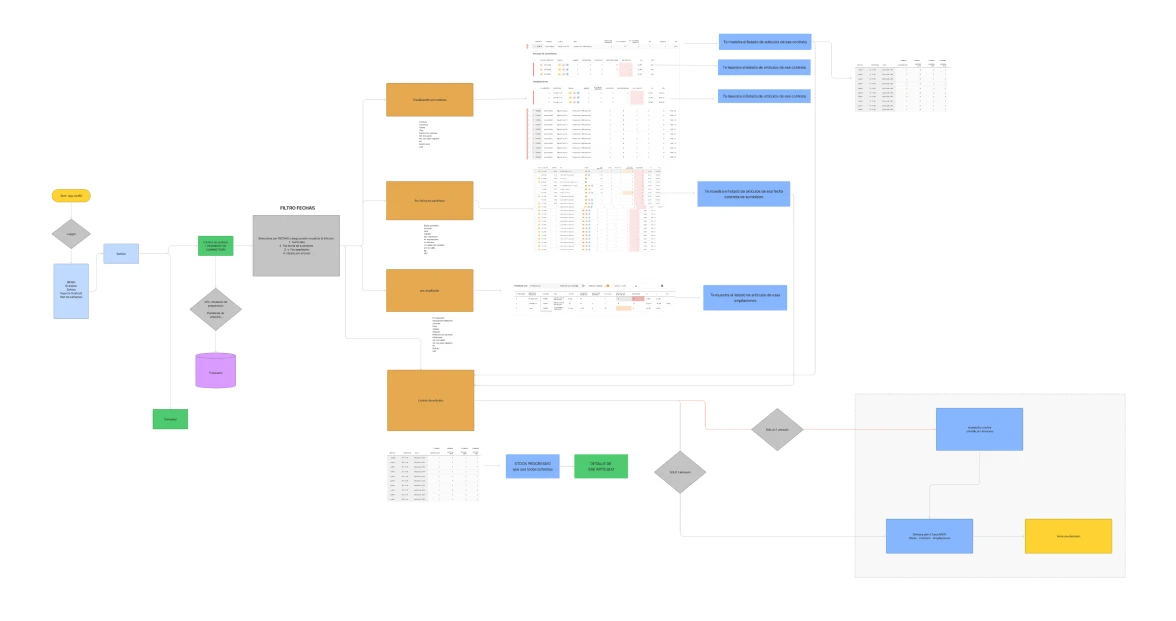
Building on that foundation, we ran sessions with business to understand operational processes in depth, mapped user flows for each profile, and built a new information architecture that structured navigation and access levels around the real goals of each role.
Architecture
User flows
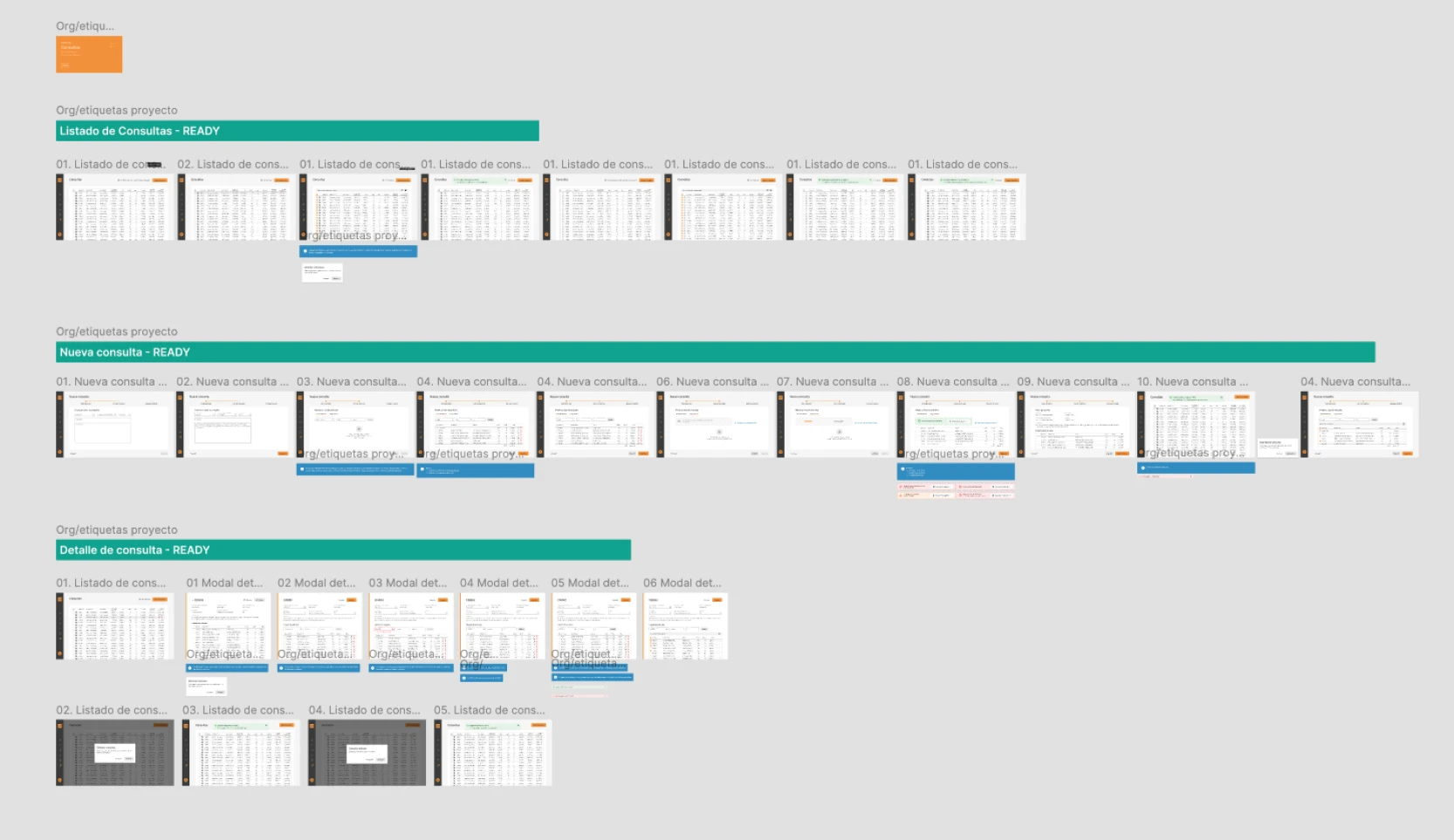
Before handoff, we validated functionality through prototypes and documented functional specifications and validation logic so development had everything needed to build without ambiguity.
02. Look and feel
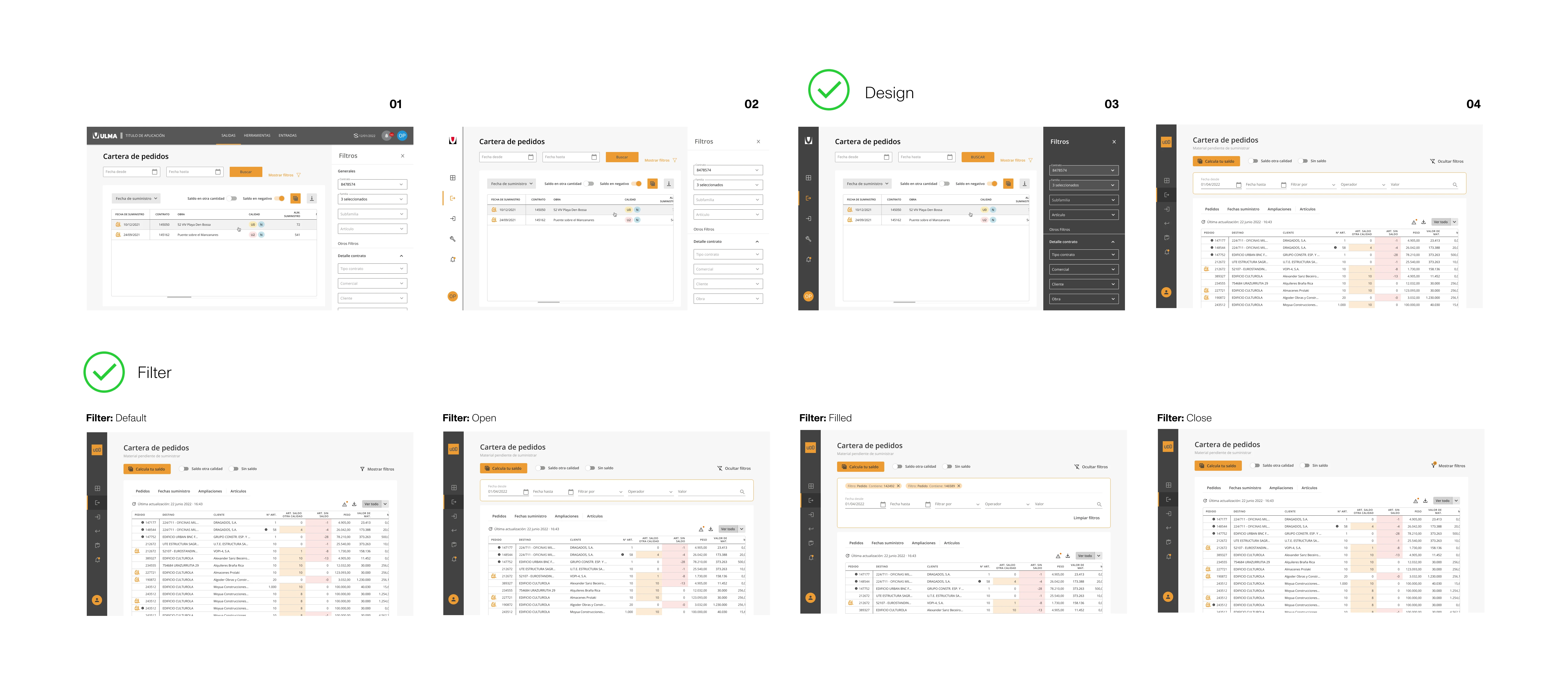
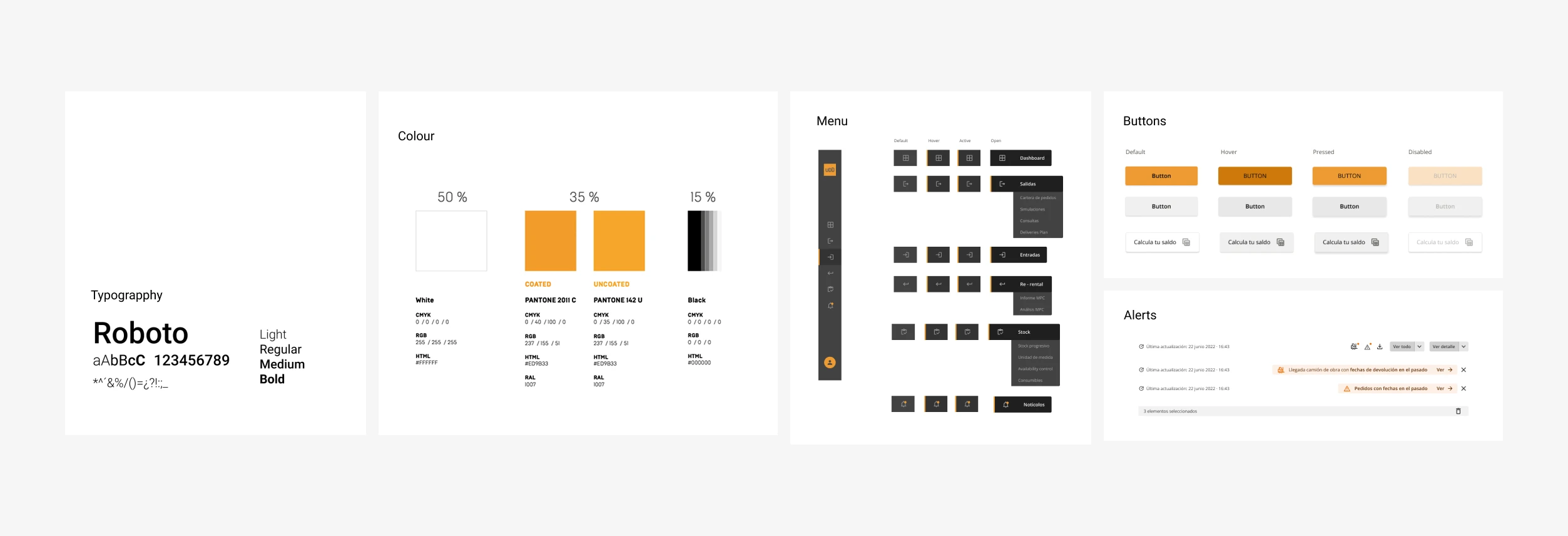
We started from ULMA's brand style guide. From it, we extracted the corporate colours, defined the typography for the application, and built an adapted component library. The goal was for development to only need to apply the colours, without having to make visual decisions from scratch.
Design Evaluation
Design and filter
Solution
 Solution
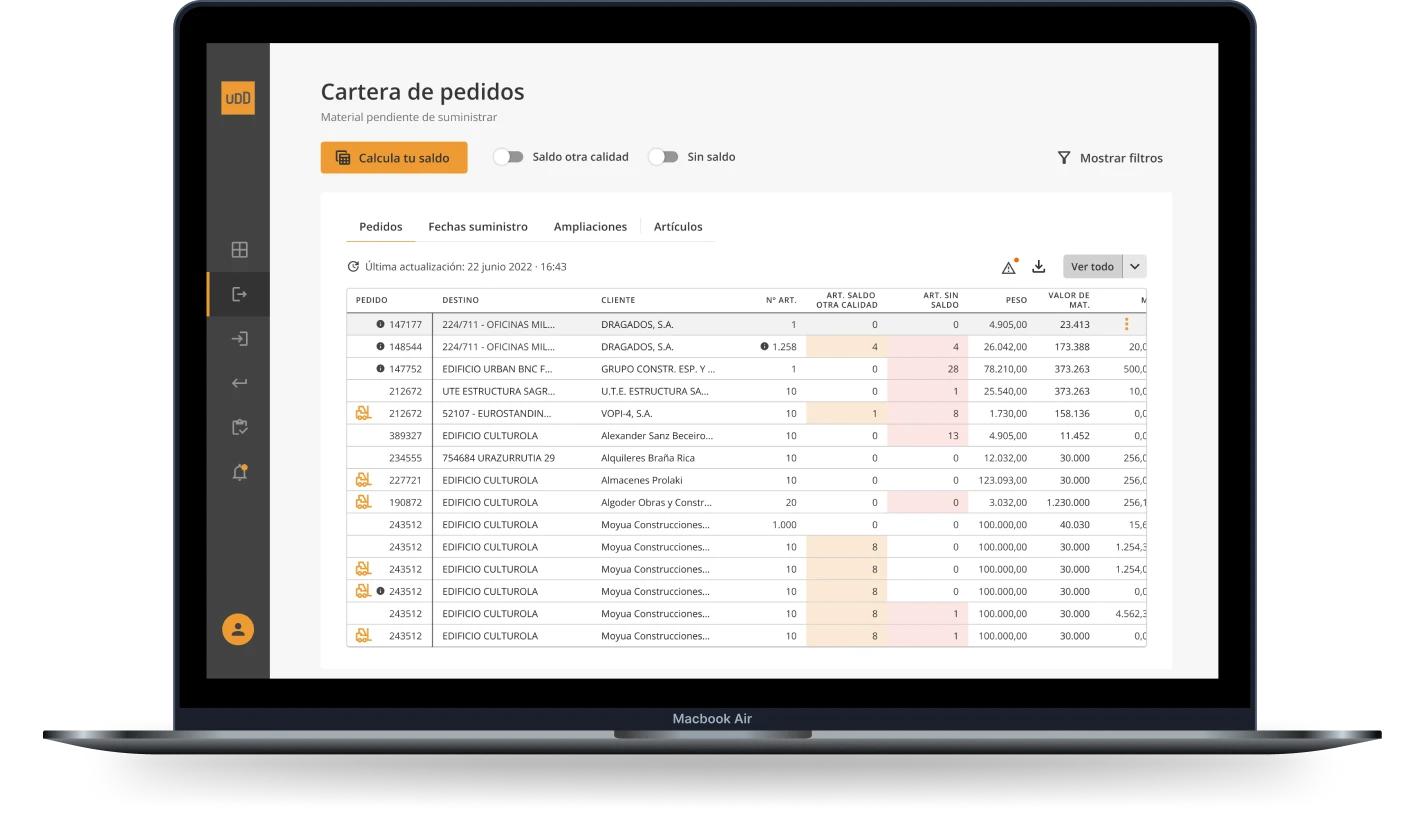
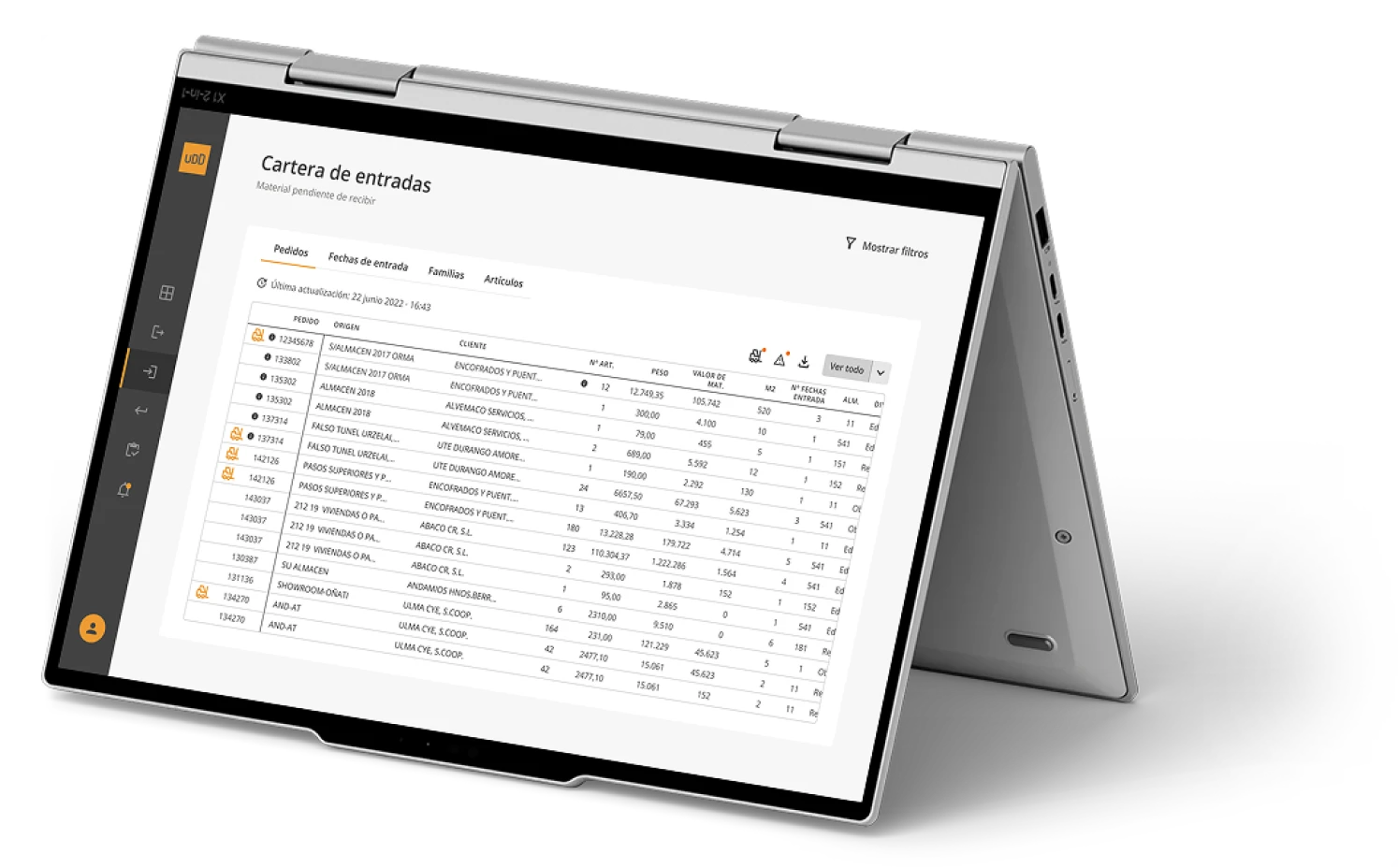
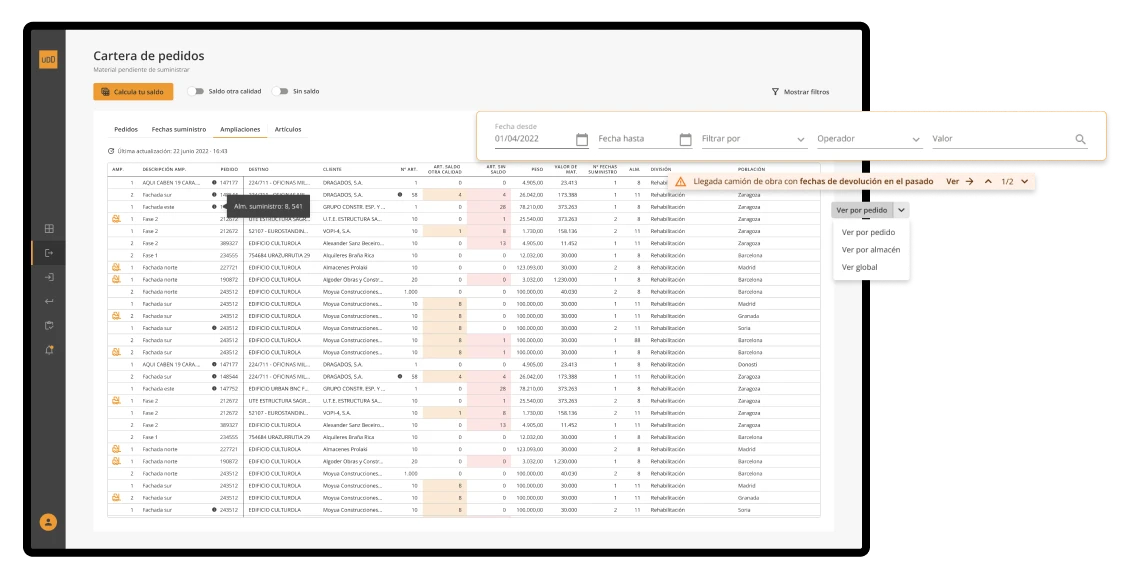
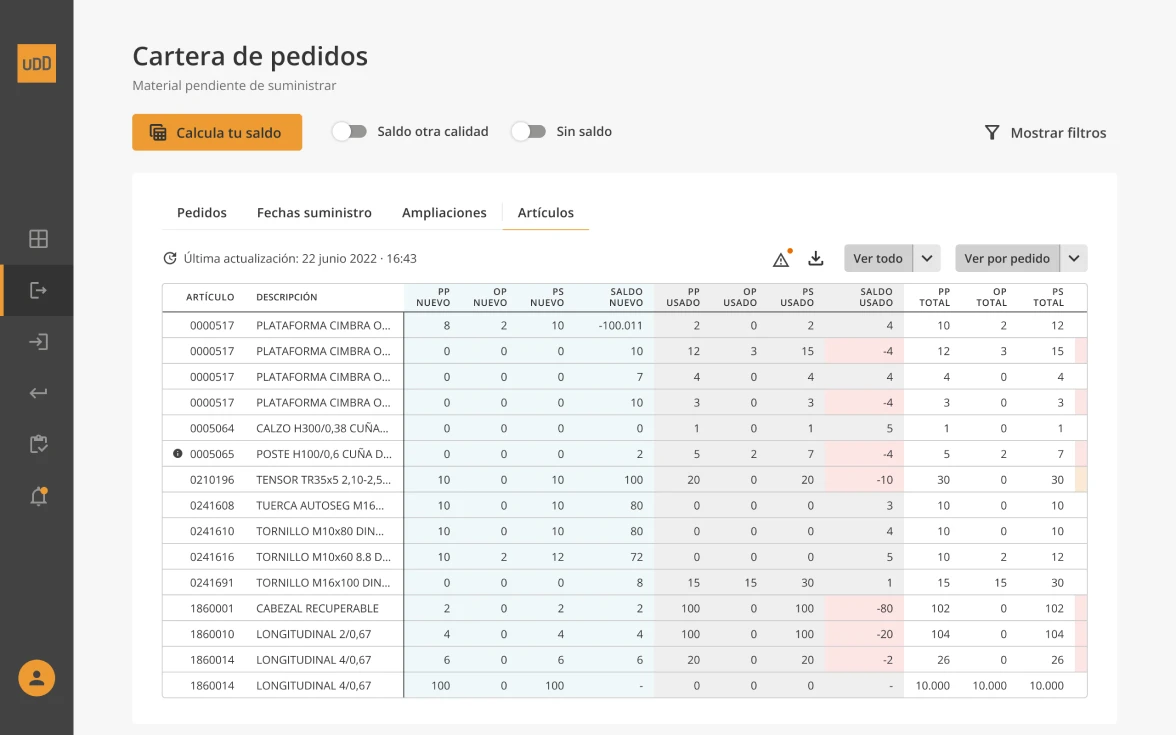
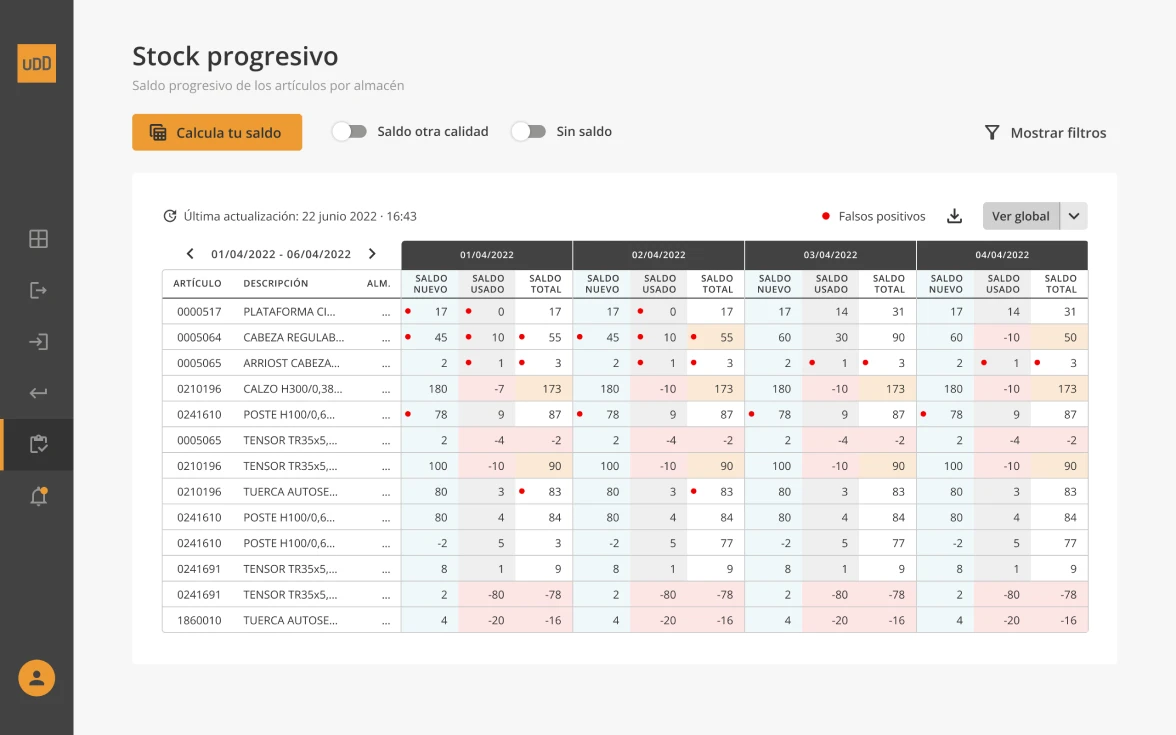
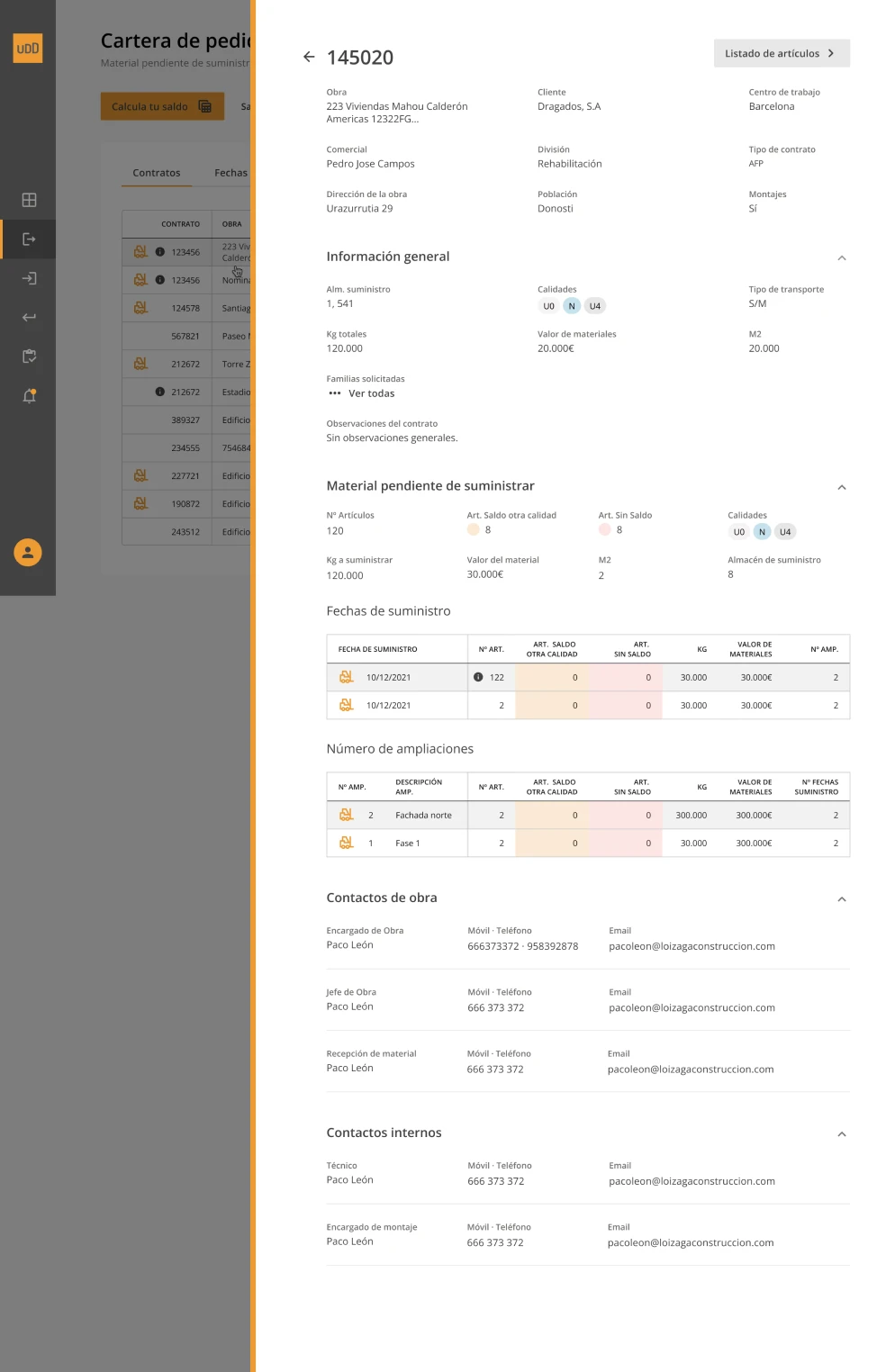
The result of that process was a platform with a clear information architecture, navigation adapted to the needs of each user profile, and a visual identity consistent with ULMA's brand. The screens show the structure and look and feel we established as a foundation for the team to keep building on defined criteria.
Results
 Results
-
Faster and more efficient decision-making, supported by higher-quality data and a global overview.
-
Increased agility in response and problem-solving, enhancing the logistics department's image with internal clients.
-
Simplified access to information, streamlining logistics management and organization.
-
Ability to run supply simulations quickly and easily.
-
Platform and data structure ready to begin applying artificial intelligence techniques.
The UDemanD platform, developed in collaboration with NTTDATA, has enabled ULMA to make its manufacturing, supply, and material return processes more efficient. This cutting-edge platform has elevated ULMA's technological and digital capabilities and has been efficiently and rapidly developed and implemented across more than 20 ULMA Construction subsidiaries worldwide.
Learnings
 Learnings
Understanding your users is not just a step in the process, it is the foundation of everything.
Without knowing who they are, what they need, and how they work, any architecture or design decision is just an assumption. This project confirmed it: pausing to define users properly was what made it possible to move forward with confidence.
Managing client expectations is part of the process, especially when you need to slow down to move forward well.
An impatient client eager to see progress and an undefined foundation is a difficult combination to manage. Moving forward in parallel with something tangible, the look and feel and simpler flows, was what kept trust intact while we resolved the core problem.
A team without clear leadership needs someone to take direction.
The absence of a project manager, a demanding client, and a team without clear direction was our starting point. In that context, a united team with a good attitude and a clear sense of what needed to be resolved first was what kept the project on track.